The EEMS book
What is EEMS?
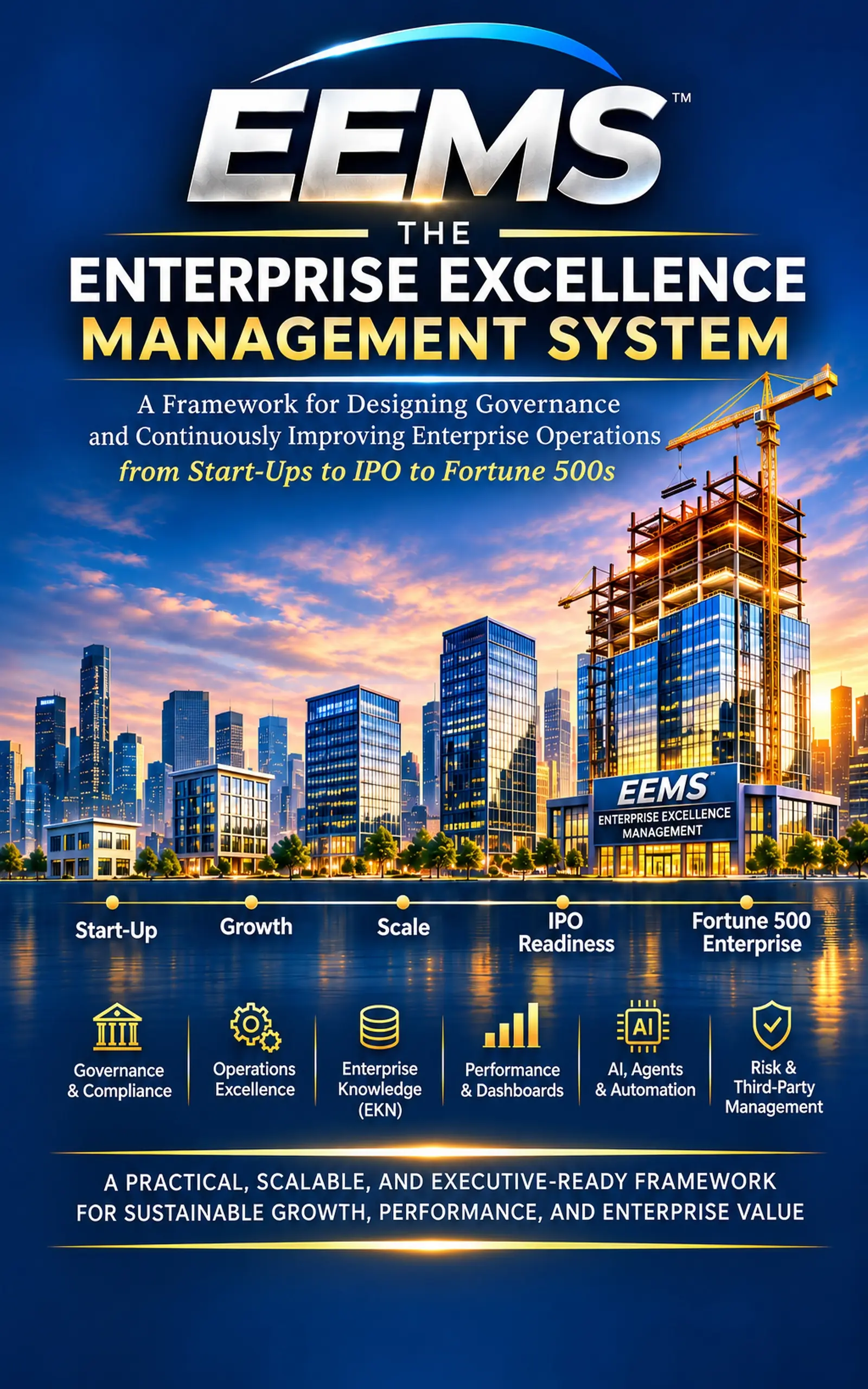
The Enterprise Excellence Management System is Douglas B. Aunkst’s practical framework for designing, governing, operating, and improving an enterprise from startup through public-company scale.
Who the book is for
Founders, executives, transformation leaders, operations professionals, and business students can use EEMS to define how decisions are made, how work is performed, what gets measured, and how risks are managed.
Inside the book
Explore 20 topics drawn from the book, grouped by the decisions leaders face.
Foundations and leadership
- EEMS foundations
- Connect enterprise strategy, governance, operations, and improvement in one management framework.
- Governance and decision rights
- Define who decides, who approves, and how teams escalate exceptions.
- Enterprise standards
- Translate policy into consistent, repeatable practices that teams can apply.
- Executive accountability
- Assign ownership for outcomes and clarify leadership responsibilities.
- Strategic planning
- Turn priorities into objectives, measures, owners, and review cycles.
Risk, performance, and knowledge
- Risk and opportunity
- Assess exposure, identify opportunities, and decide what requires action.
- Performance measurement
- Choose meaningful indicators and use them to track progress across the enterprise.
- Enterprise Knowledge Nexus
- Organize authoritative information, ownership, access, and traceability.
- Strategic initiatives
- Govern projects and change programs from selection through delivery.
- Enterprise Excellence Index
- Bring operating measures together to assess progress and identify gaps.
Reporting and operations
- Reporting architecture
- Design how operating data moves from teams to decision-makers.
- Executive dashboards
- Build views for leadership and let users trace results to supporting detail.
- Functional performance
- Apply reporting to sales, service delivery, production, and transaction workflows.
- Quality and defects
- Track recurring errors and direct action toward their causes.
- Production workflow
- Define handoffs, queues, approvals, and exceptions across the operating process.
Stewardship, AI, and scale
- Future readiness
- Keep controls, documentation, and operating practices current as needs change.
- Conversational AI
- Identify tasks where generative AI can assist and where human judgment is needed.
- AI agents and retrieval
- Use agents and retrieval-augmented generation to connect assistance with approved enterprise knowledge.
- Governing AI
- Set authority, guardrails, evaluation practices, and escalation points for AI-enabled work.
- Startup to public company
- Expand management practices as the business adds people, complexity, and oversight.
Watch the book introduction
Get the book
Select a format to continue to its purchase site.
Hardback ISBN 979-8141945038